
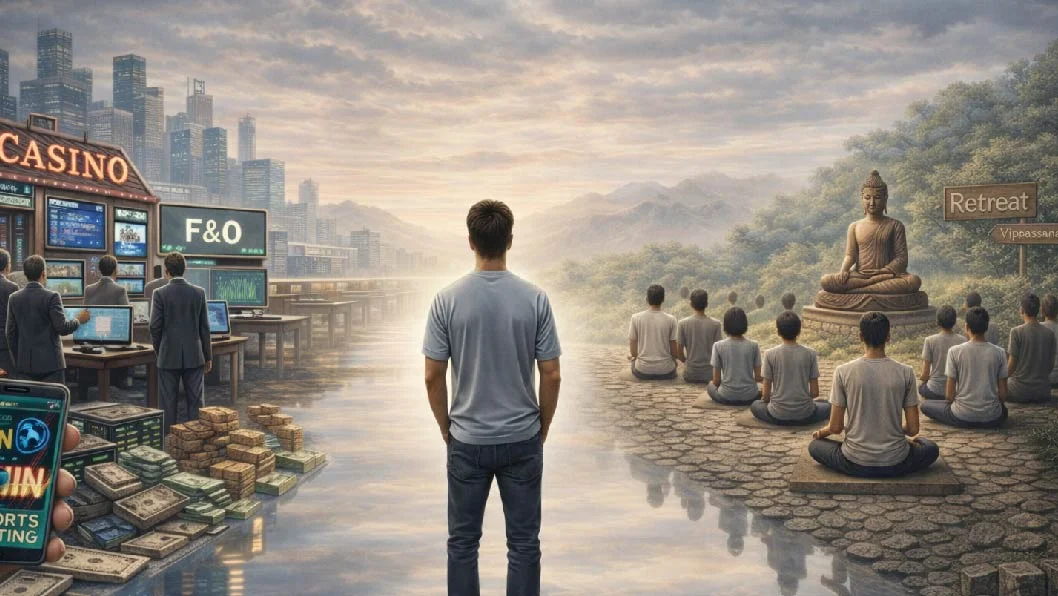
What crypto bros and bhajan-jammers have in common and why neither works.
Six months into my ride across India learning yoga and philosophy, I felt exactly as empty as the day after CreditVidya's exit. Money hadn't fixed my hollowness. Meditation wasn't fixing it either. That's when I realised I was doing the same thing as the guy day-trading memecoins between gym sets. He was chasing variance to feel like he had control over his life. I was chasing detachment to feel like I'd transcended needing control.
Here's what's happening to you right now:
Your best friend just told you he's terrified AI will take his job. He's not wrong—1 in 2 people in your generation share that fear. You haven't made a real new friend in two years because every interaction goes through a filter, a match, or an algorithm. You can't even remember the last time you made a choice that wasn't suggested by Netflix, Bumble, Zomato, Spotify, or some other feed.
So you do one of two things:
You bet. You trade F&O with money you can't afford to lose. You buy the memecoin. Because for the 4 seconds between placing the bet and seeing the result, you feel like you matter. You feel like a cause, not an effect.
Or you retreat. You sign up for the 10-day Vipassana. You post sunrise photos with Sanskrit captions. You tell yourself you're "above material success" when really you're terrified of trying and failing publicly.
The data confirms this split. Sports betting revenue has surged 5,500% since 2017. Simultaneously, the meditation app market has hit $4.2 billion.
These look like contradictory trends, but they're not. Different doors. Same building.

The Death of Agency
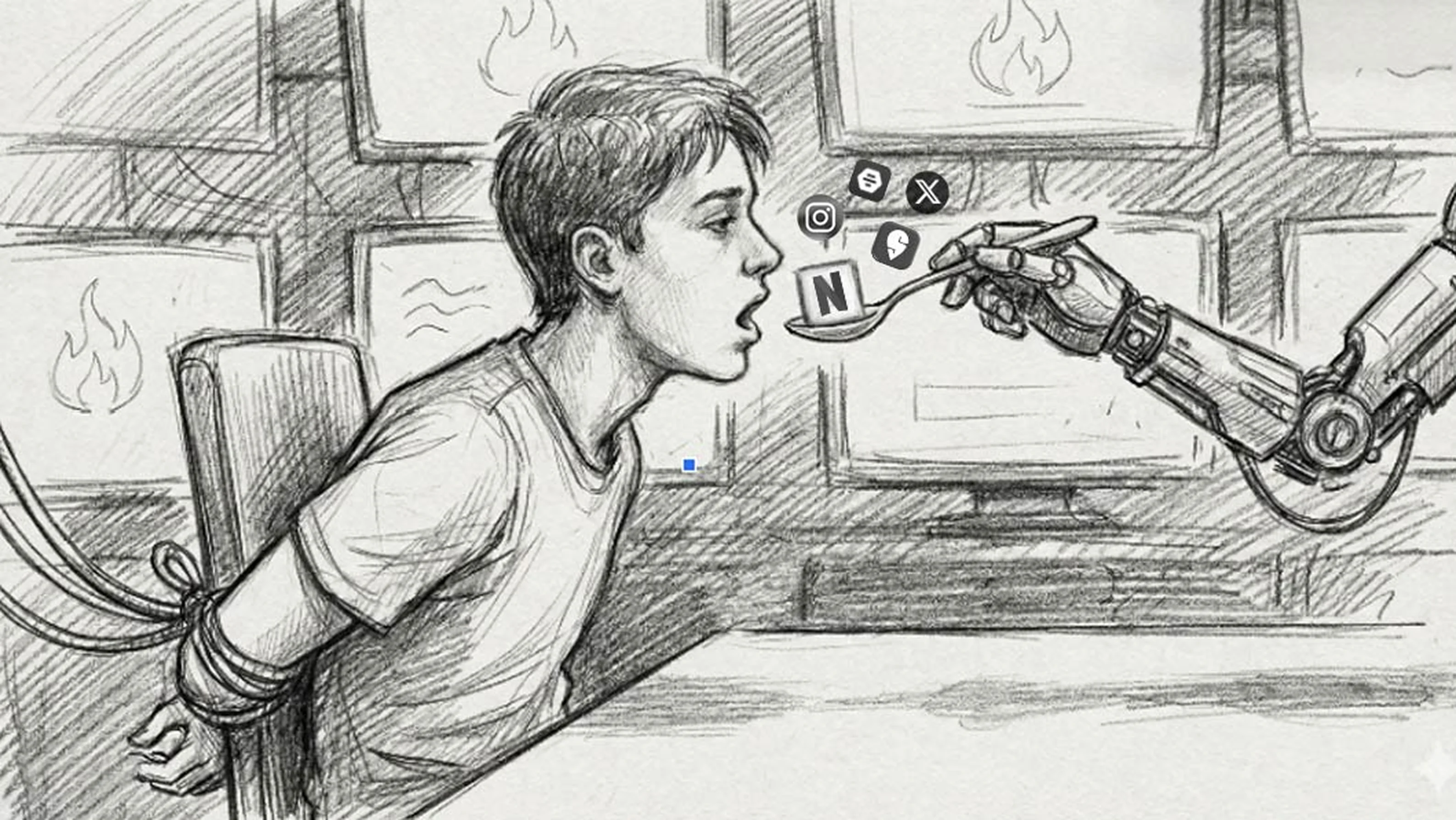
We now have a generation whose path to agency - the biological drive to control your own life - has been systematically destroyed by algorithms, AI, and social media. The result? A mass split into two camps that look like opposites, but are actually seeking the same thing.
Long Degeneracy camp: Gambling, memecoins, high-variance bets to simulate the feeling of control.
Long God camp: Meditation apps, yoga certifications, and spiritual performance to simulate transcending the need for control.
One leads to the casino, the other to the monastery, but both offer the same thing: the feeling that you're choosing your path when you're actually avoiding having to forge one.
Having experienced both, I chose a third path - writing. Not because it's superior, but because it allows me to sit with the discomfort of not knowing if I'm doing it right.
How We Lost the Courage to Climb
Maslow warned us about this 80 years ago. He predicted that if we ever solved hunger and shelter, we wouldn't get utopia. We’d get a "new discontent” unless individuals were doing what they were "fitted for."
His conclusion was stark: "What a man can be, he must be."
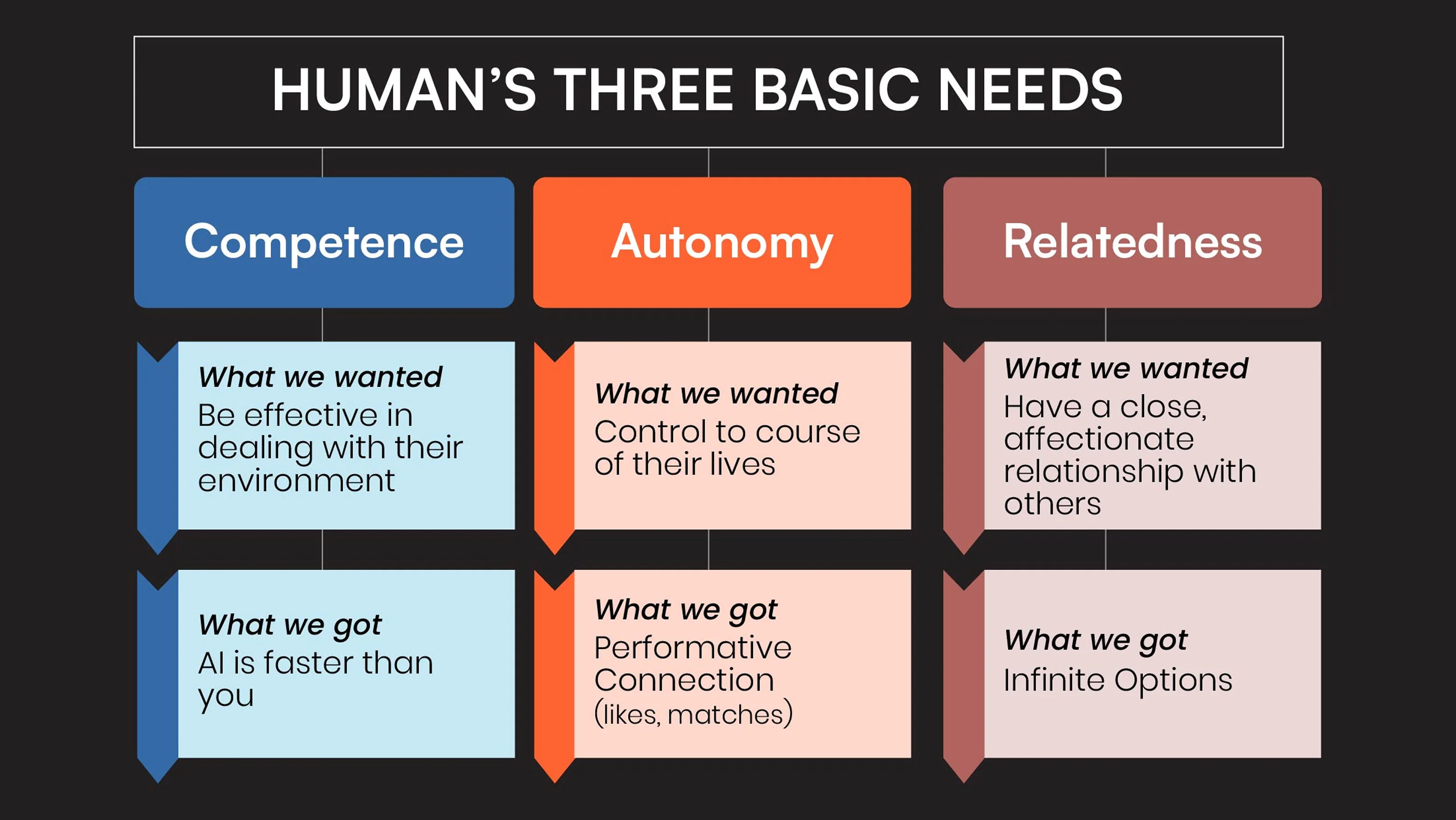
Psychology gives us a framework called Self-Determination Theory (SDT). It argues that once you are fed, you need three "nutrients" to stay sane: Autonomy (control), Competence (mastery), and Relatedness (connection).
In the last decade, we haven't just blocked these needs; we have inverted them into anxieties. We wanted agency, but we got fear.
- The Death of Competence (Fear of Obsolescence) We used to believe that if you put in 10,000 hours, you would master a skill and secure your future. That contract is broken. Just as Gen Z entered the workforce, AI arrived to threaten their utility and dissolved the path to competence. The result is a Rational Fear of Obsolescence. 52% of Gen Z now fear being replaced by someone with superior AI skills.
- The Death of Relatedness (Fear of Intimacy) We have traded the messiness of community for the safety of connectivity. We are terrified of the friction of real life, so we retreat to the algorithmic safety of Hinge and Raya. We don't meet people; we filter profiles. We have replaced the risk of connection with the assurance of a match. But this safety comes at a cost: we get the metric of relatedness (a match, a like) without the nutrient of presence.
- The Death of Autonomy (Fear of Choice) We claim we want freedom, but true freedom is terrifying. It requires taking responsibility for outcomes. To cope, we have outsourced our volition to the "Black Box." Over 70% of what a young person watches on YouTube is chosen by an algorithm. We let Spotify choose the music, Netflix choose the shows, and Bumble choose the date. We have developed a Learned Helplessness. We are no longer explorers of our lives but passengers in a digital vehicle we do not know how to steer.